




The Receipt: On loneliness, cancer, and the strange grace of being seen

Cancer brings with it a particular kind of loneliness that is difficult to describe to anyone who hasn’t felt it, and difficult to forget for anyone who has.
SurvivingBreastCancer.org | By William Laferriere

I just read this heart-wrenching meme on social media and it spoke to me as an epiphany (I apologize for failing to capture the meme’s author name before it disappeared).
There is a variety store somewhere — the kind with fluorescent lights that never quite commit to brightness, where the refrigeration units hum a low, tuneless note all night, and the hours between 2am and 5am move like water through sand. A clerk works the late shift there. She has, most nights, almost no one to talk to.
One night, a customer came in at an hour when almost no one does. They bought something small — it doesn’t matter what. And before leaving, they asked the clerk if she would write something on the receipt. Not a coupon code, not a return policy reminder. Something human. Anything at all.
She did. Maybe it was a few words about the night sky. Maybe it was something she'd been thinking about and hadn’t had anyone to say it to. The receipt was thermal paper, the kind that fades, the kind nobody keeps. She handed it over and the customer left.
Then another customer came in. Word had spread, the way quiet things sometimes do — not virally, not loudly, but person to person, in the particular telegraph of people who are awake when the rest of the world is not. They asked for the same thing. She wrote again. And then another person came, and another. The late-night store became, without anyone planning it, a gathering place for the people who live in the margins of the social day — the ones who work odd hours, who can’t sleep, who have nowhere else to be, who simply needed someone to acknowledge that they existed. One handwritten note on thermal paper, and somehow a community had formed around it.
Most of us know that feeling — of needing someone to just notice we’re here.
The loneliness that doesn’t have a name.
Cancer brings with it a particular kind of loneliness that is difficult to describe to anyone who hasn’t felt it, and difficult to forget for anyone who has.
It is not the ordinary loneliness of a quiet weekend or an empty apartment. It is something more layered and more specific. There is the loneliness of sitting in an infusion chair surrounded by other patients, all of you tethered to your poles and your drip bags, each person sealed inside their own private reckoning — and not being able to say a word to any of them, because what is there to say, and where would you even begin. There is the loneliness of coming home the night of your diagnosis and watching the people who love you most suddenly go quiet, searching for something helpful to say and finding nothing, their silence not unkind but vast, a new distance that opened without warning. They love you and cannot reach you.
There is the loneliness of being finished with treatment while still feeling broken in ways that don’t show. The world, which has been watching and worrying, begins to exhale and drift back to ordinary life. People say you must be so relieved. And you are, partly — but you are also frightened in a way that doesn’t diminish when the IV comes out, and grateful that the hard part is over while also grieving that it happened at all, and unsure who you are now on the other side of it. The world expects celebration. You are standing in your kitchen at noon, still in yesterday’s clothes, not sure how to explain any of this.
And then there is the 3am loneliness — the one that belongs entirely to darkness. The fear that arrives when the house is quiet and there is no distraction left and the mind turns, as it always does at that hour, toward the hardest questions. That loneliness has no audience. You don’t want to wake anyone. You’re not even sure what you would say. So you just sit with it, alone, in the way that so many people with cancer have sat with it — this particular 3am silence that has no good answer, only the long wait for morning.
There is also, and this one is perhaps the loneliest of all, the loneliness of feeling like a burden. Of watching the people who love you rearrange their lives and wear their worry quietly and not wanting to add one more phone call, one more request, one more difficult conversation to the weight they’re already carrying. So you say you’re fine. You say you’re managing. You carry as much as you can alone, and the aloneness compounds.
What the research knows, and what it costs
It turns out that loneliness is not merely painful — it is physiologically costly. Social isolation is associated with increased inflammation, suppressed immune function, and worse outcomes across a range of serious illnesses, including cancer. Patients who lack strong social support are significantly more likely to experience depression and anxiety during treatment. And in survivorship, perceived social connection is one of the most powerful predictors of quality of life — not the number of friends, not the frequency of social events, but the felt sense that someone, somewhere, knows what you’re going through and is present with you in it.
This is not a minor footnote. It means that connection is not a comfort measure. It is a health measure. The loneliness that cancer patients carry is not weakness or self-pity. It is a real and serious condition, with real and serious effects — and it deserves to be taken as seriously as the physical protocols of treatment.
What the clerk understood
The store clerk didn’t design a program. She didn’t convene a task force or launch a campaign. She just looked at another person who needed to be seen, and she wrote something true on a piece of thermal paper. That was all. And it was enough to change the quality of someone’s night — and then another person’s night, and then another.
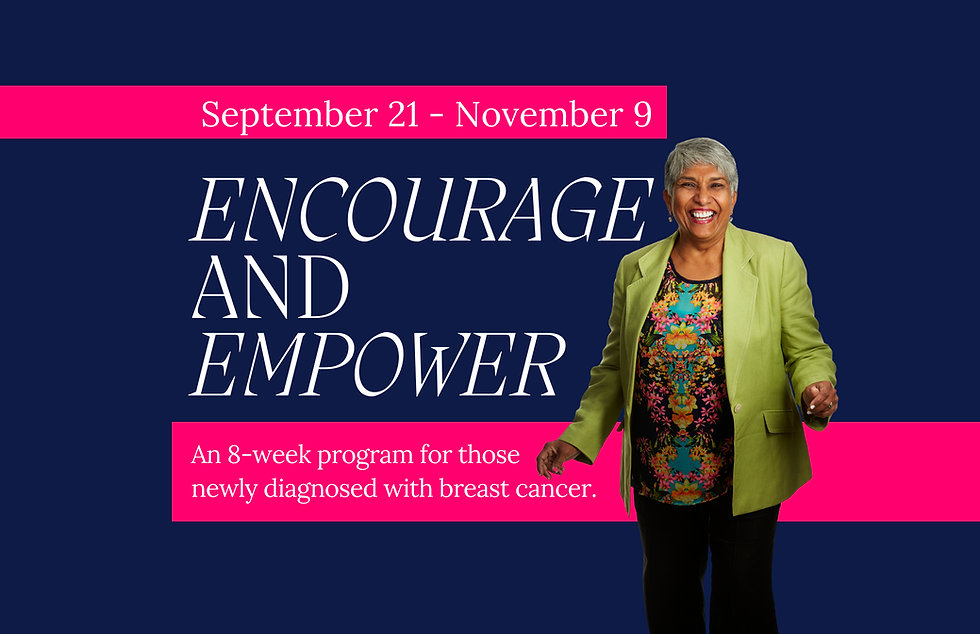
What SurvivingBreastCancer.org does is not so different, at its core. The support groups, the community programs, the spaces where people with breast cancer can find each other — they exist because someone understood that patients deserved a place where another person would write something human on the receipt. Not a pamphlet. Not a list of resources. A real acknowledgment, from one person to another, that says: this is hard, you are not invisible, and you do not have to carry this part alone.
The formats are different from a late-night variety store. But the impulse is the same.
The door is open
If you have been sitting with your loneliness quietly — not wanting to explain it, not sure it’s bad enough to warrant attention, not wanting to be a burden even to people whose entire purpose is to be present for this — you don’t have to explain anything.
You can just come in.
SBC’s support groups and community programs ask very little of you at the door. You don’t have to be articulate about what you're feeling, or ready to share, or certain that what you’re going through qualifies as hard enough. You just have to show up at the hour when you need someone to write something human on the receipt.
That’s what we are here for.
Read More:
On the Podcast: Breast Cancer Conversations
The Hidden Trauma of Breast Cancer: PTSD, Fear, Triggers, and Healing
Share your story, poetry, or art:
SurvivingBreastCancer.org Resources & Support:


