

How Early Support Changes Your Breast Cancer Experience


Key Takeaways
Boosts emotional resilience: Early support can reduce the shock, anxiety, and depression that often follows a breast cancer diagnosis.
Simplifies complex decisions: Navigation networks help individuals manage information overload and make confident treatment choices.
Enhances well-being: Incorporating supportive care early can improve long-term quality of life.
Provides a safe space: Peer groups offer a unique environment where shared experiences combat isolation, build trust, and foster growth.
For many people, a breast cancer diagnosis divides life into two chapters: before and after. One moment you’re planning for the future; the next, you’re sitting in an exam room trying to process unfamiliar medical terms and difficult decisions.
Fear. Uncertainty. Anger. Loneliness. While every experience is different, most people face moments when the road ahead feels overwhelming.
In those early days, it’s easy to focus entirely on appointments, scans, and treatment decisions while putting emotional support on hold. But waiting can make an already difficult experience even harder.
Research shows that social and psychological support can improve quality of life, help people cope with treatment, and may even contribute to better health outcomes. Support isn’t separate from cancer care; it’s part of it.
The sooner you build a network of counselors, peer groups, friends, family members, or patient advocates, the sooner you can benefit from their support. This early support can’t completely eliminate the challenges of breast cancer, but it can remind you that you’re not alone.
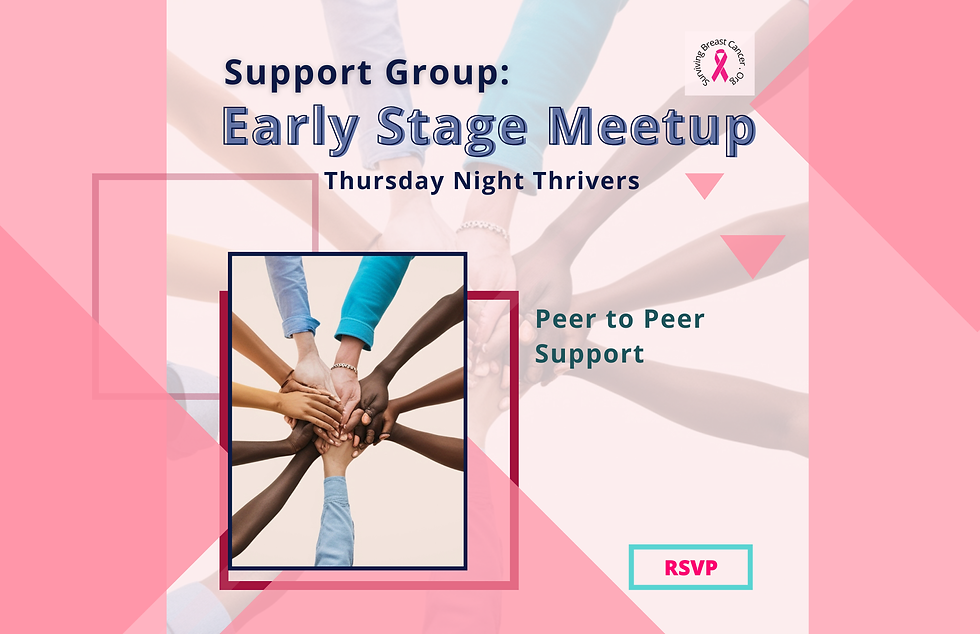
Start building your peer support system at SurvivingBreastCancer.org’s Thursday Night Thrivers support groups—no matter where you are in your diagnosis, treatment, or survivorship, there’s a place for you.
Why “I’ll Figure It Out Later” Often Backfires
Many people wait until they hit a wall—exhaustion mid-chemotherapy, a sudden emotional crash, or a practical crisis such as missing work—before they reach out for help. The reasons for waiting make sense on the surface. You don’t want to burden people. You’re still processing. You want to feel strong.
But support systems work better when you build them before you desperately need them. Establishing connections with a counselor, peers, or a trusted online community before treatment intensifies means those relationships are already active when things get hard. You’ve already brought your support people into your experience—you don’t have to start from scratch at 2:00 a.m. when your anxiety spikes.
One underappreciated piece of early support is the simple act of telling people what you actually need. People in your life want to help, but some don’t know how. Giving them specific tasks, like driving you to an infusion appointment, dropping off a meal, or handling a phone call you don’t have energy for can provide genuine relief.
Small logistics, handled early, free up enormous amounts of mental energy for the things that matter more.
People You Didn’t Know You Could Call
Most comprehensive cancer centers employ oncology social workers, professionals specifically trained to help people navigate the emotional, practical, and financial dimensions of a cancer diagnosis. Their services are typically free. They can connect you with transportation assistance, financial aid programs, mental health referrals, and support groups. If your care team hasn’t mentioned this resource, ask directly: “Do you have an oncology social worker I can meet with?”
Patient navigators serve a related but distinct function. They help coordinate care, explain treatment plans in plain language, and make sure nothing falls through the cracks between appointments. If your care team doesn’t offer one, ask for a patient navigator.
Mental Health Is Part of Treatment
The emotional impact of breast cancer extends far beyond the hospital or treatment center. You might find yourself lying awake at night replaying conversations with doctors, worrying about your family, or wondering how treatment will affect your future. Or, you may find yourself putting on a brave face for loved ones while struggling privately with fear or sadness.
Seeking help early can make a meaningful difference. Counseling, support groups, and evidence-based approaches such as cognitive behavioral therapy can provide practical tools for managing distress and regaining a sense of control. Mental healthcare is not a sign that you’re struggling to cope. It’s one more form of support that can help you navigate an extraordinarily difficult experience with greater confidence and resilience.
Community Doesn’t Require Proximity
Connecting with others who understand a breast cancer diagnosis from the inside offers something that even the most loving friends and family can’t always provide. Peer communities reduce isolation, share practical information, and remind you that what you're feeling—however strange or frightening—is something others have navigated.
SurvivingBreastCancer.org offers multiple online support groups in English and Spanish. Our groups are active, curated communities with real support.
You Don’t Have to Do This Alone
A breast cancer diagnosis asks a lot of you. Accepting support isn’t a weakness; it’s a strategy. Consider letting others carry some of the weight, early, deliberately, and without waiting for a crisis to force their hand.
Build your network before you think you need it, and you’ll be glad you did.
Whether you’re newly diagnosed with breast cancer, navigating survivorship, or supporting someone you love, SurvivingBreastCancer.org offers programs, as well as trusted educational resources on symptoms, testing, treatment options, surgery, and more, plus podcasts featuring professionals, advocates, and caregivers.
Your support helps SurvivingBreastCancer.org continue providing knowledge, connection, and community to those impacted by breast cancer, every day, all year long.
Read More:
On the Podcast: Breast Cancer Conversations
The Club Nobody Wants to Join And the Community That Changed Everything
Share your story, poetry, or art:
SurvivingBreastCancer.org Resources & Support: